DECODING THE FIRST BLACK BOX: Regulatory Compliance in Operating a Malaysian Higher Education Institution

While I have had experience teaching in three different Malaysian universities, it was on a part-time basis and never included any administrative experience. Therefore in order to start looking into the University’s operational effectiveness, one first has to understand the current context under which the University operates. One of the attractiveness of UNITAR as an investment was that it was the only Dual-Mode  University in Malaysia. When UNITAR first started in the late 90’s, it was the first full-fledged Virtual University in South East Asia and had the Mission of Increasing Access to Learning. Therefore it was awarded and Online and Distance Learning (ODL) Licence and had opened Regional Centres in almost all states in Malaysia in order to realise the goal of Access to Learning. In the mid-2000s, it acquired a “Conventional” (non-ODL) License to operate in both modes. This adds to the complexity of the regulatory and operational management of UNITAR.

This coverage of regulatory compliance is not meant to be exhaustive, but rather to emphasise the major components of regulatory compliance required of higher education institutions at a high level. This level of information is deemed useful for those at a decision-making level of the institution which (like me) do not have a background in managing a higher education institution.

1. Institutional License

There are only two types of Institutional Licenses in Malaysia, which is not too different from other countries. The Conventional License is accorded to most Universities. Some are given full University status from the onset (like UNITAR), while others get upgraded from a College, to University College, to full University status. There are operational and financial implications for the type of license applied for – for example, the ratio of PhDs to post-graduate subjects taught, the equipment and facilities required as well as the paid-up capital requirements differ.

Among factors which may require a University to update their license, or at least to inform and update the Ministry of Education are the changing of the Name of the University, changing of the Chief Executive (Ketua Eksekutif – under Akta 555 refers to the Vice Chancellor) and changing and/or adding to the location of the University. In the application, the University also has to specify its strategic focus areas which would have an implication on the programmes that it intends to offer.

This part of the application is normally processed by the Standards and Registration Department (Bahagian Piawaian dan Pendaftaran). In addition, if the Institution intends to open its doors to International Students, it needs to get approval from the Home Ministry (Kementerian Dalam Negeri).

2. Premise License and Operationalisation

Once the Institutional License is obtained, the approval for the premise has to be obtained. Only upon approval by the Local Council and the Fire Department would the visit by Ministry officials be scheduled. As an increasing number of Private Higher Learning Institutions (including UNITAR) opt to occupy commercial premises which usually comprises of many but not all floors of a commercial building, a large consideration is the access and exit requirements from the building (especially if the number of students is substantial). This in particular is of concern by the Fire Department. From an operational perspective, the handling of the lift traffic is also important to ensure non-disruption of use by the other tenants of the building. It may be advantageous to put the classrooms at the lower floors (higher traffic) and the faculty and administrative offices at the higher floors (lower traffic) to ease traffic flow.

3. Programme Accreditation

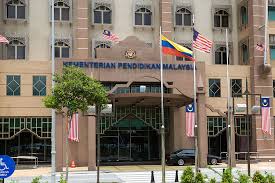
Once the Institutional and Premises Licenses have been obtained, the Institution would have to submit its programmes to both Ministry of Education (MoE) and the Malaysian Qualifications Agency (MQA). In general, MoE looks at the compliance of the Education Institution whereas the MQA looks at the quality of the programmes. In reality, MoE also looks at programmes from a market and strategic viability perspective (which may require additional information to be submitted) in line with what had been submitted for the Institutional License earlier.

There are different programme licenses to be obtained for conventional and distance learning programmes. There are various changes afoot on the Online and Distance Learning (ODL) Institutions when they are submitting for their Distance Learning Programmes as MoE are making some changes to it. In general ODL Institutions like Open University Malaysia, Asia eUniversity and Wawasan University are only allowed to offer distance learning programmes. Conventional universities, as of the current date, are allowed to offer distance learning programmes after a certain period of time.

Another permutation is whether the institution has an Open Entry License (which normally ODL institutions, including UNITAR and the other three mentioned above, have) which allows recognition of prior learning from a programme-entry requirement perspective. For example, if a student has a recognised Diploma and has worked for more than 5 years and is 35 years old or more (these regulations are subject to changes made by MoE), he or she can apply to do a relevant Masters Programme directly without doing a Bachelors degree first. This is, however, subject to the acceptance by the University’s vetting process via an interview. Please take note however that both Distance Learning and Open Entry are only applicable to Malaysian students only, and not International Students (who must do the Conventional Programmes).

Upon submission of the programme to MQA, the Institution can expect the whole process till approval to take approximately six to nine months, depending on the circumstances. The length of time is dependent on the following:

a. The Completeness of Documentation submitted – this is often one of the most typical reasons why a programme approval process is delayed; to my knowledge, if documents are all in order, the client charter for MQA to process the application is 3.5 months, though depending on the other factors listed here

b. The Selection, Discussion and Report produced by the Subject Matter Experts in the MQA Panel – this is often the biggest factor of delay in approval, as there are many parties involved. If submitting a programme, it is often advisable to stick to the Programme Standard (if available for the type of programme submitted) and to keep to familiar nomenclature.

c. The Response to the Comments by the Institution – this is another factor to be on the lookout for. If the Faculty does not respond to MQA’s comments in a timely manner, the date of offering the subject would be greatly delayed. It would also really help if there are consultation sessions with the Desk Officers from MoE assigned to the institution to ensure full understanding of the comments and the subsequent response.

4. License to Run Programmes at Locations

This part mainly applies to ODL Institutions. If a programme is to be offered at a location other than the Registered Main Campus (the programme has to be registered there first), then approval by MoE is required. UNITAR currently runs its programmes in 10 locations by partnering with Colleges or University Colleges in most states and run a plethora of programmes there. Upon approval by MoE and MQA, the institution would get a Partial Accreditation (PA) of the programme and only just prior to the first cohort graduating, MQA would do a visit for a Full Accreditation (FA) of the programme, subject to complying to the comments given (some are mandatory whereas other are suggestions).

The implications of getting FA is many-fold; firstly all funding from Federal Government funds would require the programme to obtain a FA. Secondly, government-sponsored students from other countries normally require FA-approved programmes as well. An additional consequence would be for those in the government service, whose promotions would depend on an MQA FA-approved programme.

The points elaborated above represents the major compliance factors for an Institution of Higher Learning (IHL) in Malaysia. What has been mentioned is subject to change by MoE, but I hope nonetheless would provide a useful guide to administrators of IHLs out there. I certainly wished that I knew all these factors from day one!
kpt

FIRST THINGS FIRST: Learning to Differentiate the Urgent from the Important

It can easily be overwhelming when you are tasked with undertaking a Transformation Programme for an Institution. There are usually multiple deliverables in the 100 Day Plan normally required by shareholders and stakeholders and it is easy to be drowned in multiple issues. Here are a some guidelines I would recommend, based on the UNITAR experience:

1. Start with Sound Financial Reporting – this is the first and final yardstick for the success of an institution or company where the buck stops with the CEO (with a dollop of responsibility and accountability with the CFO, of course). In order to test the integrity of the financial reporting, one needs to first understand the Key Drivers of the business. Early on, it is also imperative to understand that apart from the Income Statement, P&L and Balance Sheet, what are the key ratios / indicators that needs to be reported, and the definition of those indicators (especially when your institution is being benchmarked against other similar institutions or investments) – and this often defines the Key Drivers

2. Really, Really Identify the Right Key Drivers – for a Private Higher Education Institution that does not receive any significant funding or grants (unlike Public Institutions where the dynamics are very different), the only or most significant source of revenue is from fee-paying students or their sponsors. Therefore it is important to understand the major factors impacting student numbers as follows:

a. 3 Year Trend Analysis of Gross Additional Students by Intake – Students intakes tend to be rather seasonal, which is often affected by the following:

  • How the Institution Times its Intakes
  • When the major pre-university exam results are released
  • When acceptance into loan or scholarship programmes, or acceptance / rejection into public institutions are announced
  • The target markets (urban-rural, high-mid-low income etc) specific to the institution

b. 3 Year Trend Analysis of Returning Students by Intake – this would be the conversion of students from Foundation to Bachelors, Diploma to Bachelors (with Credit Transfer), Bachelors to Masters, and Masters to PhD. A significant factor for conversion would usually include whether internal promotional activities and incentives are done to encourage students to continue their education at the institution

c. 3 Year Trend Analysis of Student Attrition by Intake – there is no use getting many Gross Add and Returning students of your attrition is also high. It is also important to define attrition, as students could go missing, or they may defer their subjects or they may actually withdraw. It is also important to understand whether the attrition us due to academic reasons (which may be addressed by having Special Exams) or financial (where the Institution could offer some financial assistance or channel students to other sources of financial assistance including Zakat)

The most important outcome of the analysis of student trends is to understand the number of billable students (and therefore the ability to forecast your revenue) and non-billable students (where you can then trigger recovery measures as outlines in 3c above, for example). The integrity of the student numbers can then yield your Average Revenue per Student, which is the basis of your overall Sales Projection, and therefore Financial Projection.

There are several common mistakes that are made which could distort your Financial Reporting:

  • Wrong classification of billable and non-billable students – this usually happens when students are actually attending classes but have exceeded their sponsorship coverage (and therefore the institution is unknowingly subsidising their education)
  • Wrong classification of Gross Add and Returning Students – although from a revenue perspective they could be treated the same, it may affect your cost especially if marketing commission is being paid for both instead of only for the former
  • Not addressing Attrition in a Timely Manner – this is especially dire if it happens against the Trends Analysis and can significantly push down the numbers
  • Garbage In, Garbage Out – in the end, your Financial Reporting is only as good as the data you put in; efforts to audit and undertake data-cleansing exercise has to be done early, as it could otherwise result in a yo-yo of financials being reported. Over the medium term, it would make sense to re-look at the core system for institutional administration, often billed (pun intended) as a Campus Management System

3. Persistently Track and Monitor Key Drivers, as well as  Follow Up with Actionable Plans – Welcome to the Engine Room of the Transformation Programme, usually referred to as the PMO (Programme Management Office). This is a Unit that needs to report directly to the CEO, and tracks all the initiatives of the 100 Day Plan and beyond. Ideally, the members would be a mix of current staff and new ones, but at UNITAR we have proven that having most PMO members as fresh graduates works, as they are unburdened by current culture and practices. The learnings from PMO will be discussed in another posting, potentially discussed under the subject of Governance and Reporting.

In summary, there are many important aspects to address in a Transformation Programme. It is however of utmost important to separate the ‘Important’ (Needs to be Done) for the ‘Urgent’ (Needs to be Done First). It is my hope that I have made sufficient argument that the three points outlined above as the Indisputably Urgent, and look forward to feedback.

unitar

OF ENVIRONMENT, IDENTITY AND CHAMPIONS: Making the Transformative Progress Tangible

The previous post was making the point that in order to know how to move forward in the Transformation Programme, one should start with and be informed by one’s history. Also discussed was that the setting of the Institution’s direction, in this case in the form of Vision and Mission, was crucial to clearly communicate the desired path for the Institution to take. With the overarching strategy down and dusted, it was time to get down to brass tacks.

ENVIRONMENT

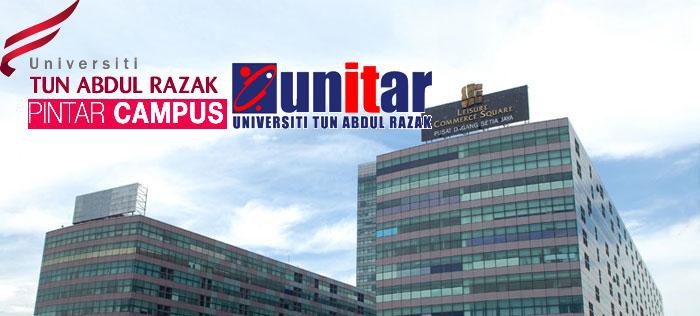
After engaging with the current management team, it became clear that the current location of the University was an issue. I could not agree more; when I first participated on the Due Diligence exercise on the University, I actually had trouble locating it. Not that it was in an obscure setting: Leisure Commerce Square, otherwise known as ‘Bali’ near the Sunway double-decker bridge over the Federal Highway was very visible and known. The problem lay in locating the University as one disembarked from one’s vehicle at the main portico – apart from a rather incongruous sign in the middle, the ‘University’ could not be visually sighted. It seems that the ‘University’ was dispersed throughout all three blocks of the office complex, and is accessed via different lifts and staircase verticals and on different floors. In essence, especially if regarded from the viewpoint of architectural phenomenology, the University did not have a sense of place.

In a Transformation Programme, the most tangible impact that could quickly be felt was a change in one’s daily working environment. When trying to impact a mindset change, having a different the ecosystem in which work takes place is absolutely essential. Although the change is not so easily done within a short span of time, it is paramount to have a concrete plan to work towards and to communicate it well. Fortunately, this issue was already flagged during the Due Diligence exercise and efforts were well underway to find a suitable location.

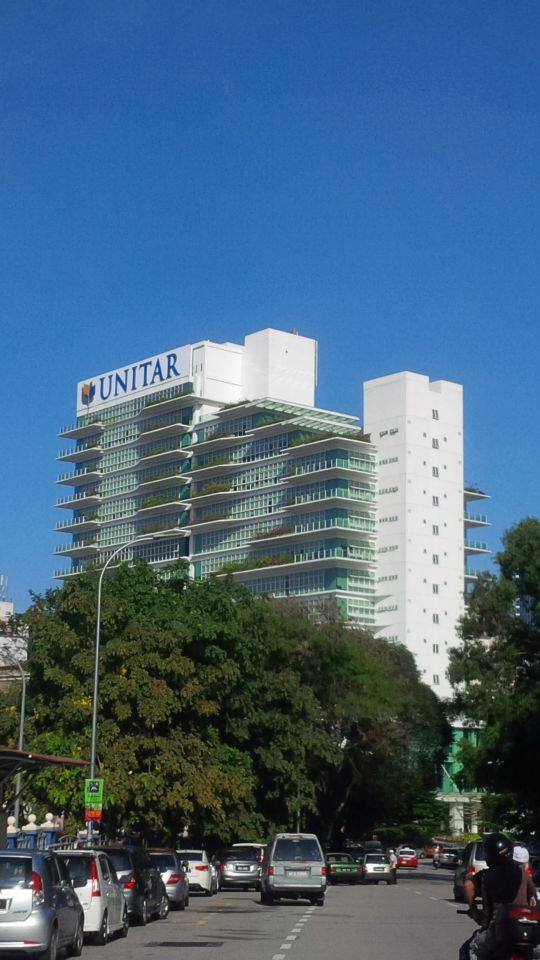
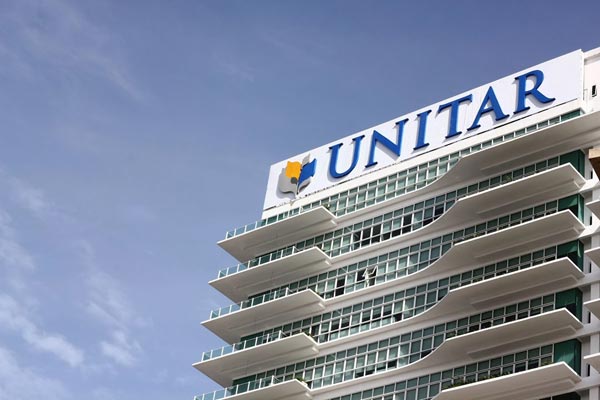
With what can only be described as God’s grace, we finally landed on a new building which was under construction at the time in Kelana Jaya. UNITAR began in 1997/1998 at a shop-office building popularly known as ‘belakang Giant’ (at the back of the original Giant Supermarket) in Kelana Jaya, within visual vicinity of the proposed new Campus. Coming ‘home’ to Kelana Jaya was symbolic of our appreciation of the University’s past, and occupying a new landmark building in the same area amplifies the point. The University’s place-making had begun.

IDENTITY

UMTECH was not a bad name. It could even be convincingly argued that ‘University of Management and Technology’ as a name was fairly progressive. The real issue was that it divorced itself from its roots, its past, its history, and that the name would probably invoke inquiries whether it was newly set-up institution. Upon further engagement with the staff, it became somewhat clearer that their affinity to its original name, UNITAR, was significant. This was even more pronounced with staff who had been with the University north of 8 years. Following further interactions with the proprietors of the University’s Independent Regional Centres (IRC) throughout the country, it was clear that the name UNITAR was much, much preferred. Quipped the Kota Kinabalu IRC Owner “The name UNITAR here is like Harvard”. Hard to argue with that.

Efforts were then undertaken to move from UMTECH to the Board-approved UNITAR International University. The ‘International’ word was included to reflect its new aspirations, one of which was to be of international standing, not merely by having international students. There were some ‘jumping through hoops’ which were necessary both from the regulatory side (with the Ministry of Education) and more importantly, the stewards of the TAR acronym in UNITAR, namely the family of the late second Prime Minister of Malaysia, Tun Abdul Razak. We were overwhelmed and humbled when they acquiesced.

When such victories are earned, it is essential to celebrate. On 18th October 2012, ‘UNITAR International University’ name was launched by the then Minister of Higher Education, Dato’ Seri Mohamed Khaled Nordin. Thus the University was officially renamed, and perhaps, in part, reborn.

CHAMPIONS

A true rebirth could not be achieved of there were no champions. While there were truly committed gems internally, it is usually advantageous to bring in external talent to champion the respective change initiatives and to achieve a good balance of knowledge and persistence. UNITAR was fortunate to have a strong and stable Human Resources Department, often the key to any transformative efforts. Having a private equity company as the main shareholder meant that the university’s financial reporting had to be greatly improved and its financial management much more well-planned. A rather convoluted and hodge-podge IT system, so central to the University which runs in both Conventional Mode (with full face-to-face classes) and Distance Learning Mode (with online forums as a major assessed activity), had to be overhauled and upgraded. The marketing team also had to be addressed, as student intakes had started to plummet even before the completion of the acquisition. Regulatory issues abound concerning both institution and programmes. The situation, to put it mildly, was rather dire.

The search for the right human capital is normally a hit-and-miss scenario; one could only tell the new employee’s performance when they are well into their jobs. From the collective experience of the new management, the one factor that could considerably lower the risk was to hire known resources. Recruitment through one’s own or extended networks often bore better fruit than pure advertising and executive searches. Being known also brings a certain reputational pressure to perform; and this is often considered a good thing.

So began a deluge of talent injection – from former Big Four accounting firms, both public and private universities as well as from the industries of banking and information technology, with the laser-like focus to improve the operations of the University. The Educational and Pedagogical transformation had to wait until the operations were much more robust and stable. The front-end reporting and back-end operations took top priority. This was in parallel to the 100-day Plan conceived as an objectives set as an outcome to the due diligence process. The Transformation, in all intents and purposes, was well underway.

fins

BECOMING YOUR FUTURE: Beginning with the Contextual Past

“Masuk dalam kandang kambing, mengembek.
Masuk dalam kandang kerbau, menguak.”

Malay Proverb

The direct translation would be “If you enter into a goat’s pen, bleat. If you enter into a oxen’s pen, bellow”. The closest English equivalent would arguably be “When in Rome, do as the Roman’s do”. By peeling a couple of layers off, one could argue that the proverb is not only about conformity and fitting in, nor is it merely about respecting the environment into which one has arrived. It is, in essence, a process of becoming.

Becoming is far beyond mimicry or assimilation; it is a conscious choice of changing oneself whilst keeping one’s internal/eternal particularities intact, and yet positively adding to the present. I remember my mate John Botham saying, after a crit session at Scroope Terrace circa 1989, that I should sound more foreign as I would sound smarter. The lad from Chesterfield added, “You speak Queen’s English better than most of us”. Of course I wanted to sound smarter, but I was just becoming (pun not intended – I was a little spiffy at most). Scroope Terrace was changing me, honest.

I was part of the “Other”, this alien species that descended upon the unsuspecting academics and operations staff of the university

When I first arrived at Leisure Commerce Square, Sunway at the start of the second quarter of 2012, I was not yet ready to “become”. It was probably due to the fact that I was part of the Due Diligence Team focusing on the academic and operational aspects of the then-named University of Management and Technology, with the considerably hip acronym of UMTECH (one may think of CalTech). I was part of the “Other”, this alien species that descended upon the unsuspecting academics and operations staff of the university, prodding with probing queries, followed by the endless requests for more revealing data. Not that they were foreign to the idea of the potential acquisition by the governmental private equity that employed me; it was, after all, another one, after a beauty-pageant format tender that took place not nine months before.

Fast forward to 19 June 2012, when I was first officially designated as the Chief Executive Officer of Unitar Capital Sdn. Bhd., owner and operator of UMTECH. I was fortunate to start at roughly the same time as my work partner in compassion and crime. Lukman is the double-hatting Chief Operating Officer and Chief Financial Officer and had an upper hand (or finger) on the pulse of the university, having been an advisor for the original acquiring company. With both of us having had to hit the ground running when we started, there was little time for reflection and belly-gazing.

Fortunately, there was something that would force the necessary Gestalt institutional introversion, and it came in the form of an imminent Townhall. The people need to be addressed; clear and early direction is very much paramount when one undertakes a company-wide transformation. It was already three weeks since taking on the mantle of responsibility, and I had three weeks worth of Mentat-mode thinking to articulate. How should the messaging be structured? How should it end? What will the employees get out of it? What is to become of UMTECH? Many other questions also plagued my already-constipated mind.

A transformation can only take root when the trajectory is founded upon the respect of history

When in doubt, always go back to basics, and there is nothing as basic as the past. A transformation can only take root when the trajectory is founded upon from the respect of history. I had delved into the beginnings of UNITAR, as the university was originally known. It was conceived as the first Virtual University in Malaysia and Southeast Asia, and was one of the first three private universities in Malaysia. Its commitment to enable Access to Learning by going the virtual route is absolutely admirable, and it predates all other virtual universities in the region.

I have always had this fascination with the number three. Maybe it was my Cantabrigian experience, where the degree is founded on the concept of Tripos; or maybe, having been trained as an architect at the aforementioned UK institution, I had the knowledge the weight resting on three points was among the most stable structures one could possibly build. Thus it was conceived that to keep things simple, the new Mission of the university would count three components. The first, triggered by the Ghanaian quote in Christensen tome  elucidated in the previous post, advised the respect of the past; therefore the first leg of the tripos would be “Enhancing Access to Learning“. The third and last leg, which is unavoidable due to the institution’s ownership by a private equity, has to be based on its financial veracity. A purely financial goal, however, would negate the developmental aspect of an educational institution, moreover one owned by a governmental PE. It has to be balanced with operational efficiency and future growth as well; thus the corresponding amalgamation was “Building a Sustainable Institution“. I was particularly pleased with the inclusion of the aspect of sustainability, a rather loaded word which has many other inflections, and can easily be expanded in the future. The third leg proved the most challenging, as it had to encapsulate what the institution is about, whilst holding a close embrace with the other two. Having had circa seven years experience teaching at various levels in three different universities, one is often pushed to having employability as  a form of yardstick the educational outcome – fortunately upon consultation with our Board of Governors, “Producing the Most Employable Graduates” evolved to become “Producing Wholesome Graduates“. Employability is an outcome, and should not be a goal unto itself. A wholesome graduate of the university should not find great difficulty in procuring employment, and “wholesomeness” connotes the immersion of values and well-being within it. The Tripos is complete.

Employability is an outcome, and should not be a goal unto itself

The Tripos is what the institution does, not what it is. By nature, collectively, the faculties and programmes offered at UMTECH fell rather neatly within the realm of Social Science (with the possible exception of IT, which is arguably an enabler for all anyway). If one were to Google “Social Science Universities”, one would most likely find right at the top of the list that institution currently known as Harvard. Borrowing a word from the title of Christensen’s aforementioned book, combining it with the above, and adding as aspirational adjective, we arrive at the new Vision of UMTECH: “The Leading Innovative Social Science University”.

In immersing myself within the university, I initiated my own ‘becoming’ into my new role. By undertaking the process of identifying its new identity, I did perhaps nudge the whole institution into its own ‘becoming’, and thus articulating its possible future. In the end, the charting one’s future by a full acknowledgement of the past makes for, with God’s grace,  the best of beginnings.

lcs

INTRODUCTORY BLUEPRINT: Beginnings and Trajectories

Peace!

Having spent my last 15 years looking at Education Transformation in one mode or another, I felt it is timely that I share my thoughts on this matter. I had been lecturing intermittently in Universities and Colleges since 1996, from Foundation right up to Masters in fields such as Architectural Design, Architectural Theory, Web Design, Art & Design, e-Business and Leadership. At the same time, I had implemented a Learning Management System and set-up a company to manage it for 25,000 users at a Fortune 500 Company, set-up and managed a Training Academy for Board of Directors, designed and implemented a Public-Private Partnership with the Ministry of Education on the management of a group of schools, participated in the acquisition and management of 3 universities for a Governmental Private Equity (PE) company, and am now managing a private university for the said PE. This was all after practicing architecture for 4 years as well as co-founding and managing a dotcom company for another 4.

Taking the lead of a university which had 15 years of history and bearing the name of one of Malaysia’s former Prime Minister, Tun Abdul Razak, is no small matter. Planning a Transformational Change into a Next Generation University only adds substantial weight to the task. As a starting point, I consulted Clayton Christensen and Henry Eyring’s “The Innovative University” ; Christensen’s Theory of Disruptive Innovation had been applied to various fields, and his take on differentiating a Higher Education Institution captivated me. It was probably the only reference I had which tackled change of an institution from a Gestalt approach.

During my days studying architecture at Scroope Terrace, one particular approach that I personally identified with was that of Phenomenology, exemplified in Christian Norberg-Schulz’s “Genius Loci: Towards a Phenomenology of Architecture” and the architecture of Hans Scharoun. When designing (or transforming), one has to start with the ‘lay of the land’, respecting the surrounding context – physical, historical, cultural and anything that informs the intended action. In a similar vein, Christensen’s book introduced a Ghanaian proverb that is equally instructive: “Look at your past, in order to reclaim your future”. I then knew, with God’s grace, what to do.

This blog was envisioned as a retrospective and prospective journal that would record the thinking behind the transformation and progression of UNITAR International University. In order to structure this palimpsest, it will be categorised into the following sections:

  1. Institution – its starts with looking at history and context in order to make a different history; the strategic direction, governance and sustainability approaches would be covered here
  2. System – this looks at the geographic, political, regulatory and economic context
  3. Learning – in my opinion, this is the single most powerful differentiation factor of a Higher Education Institution; includes teaching & learning methodologies as well as educational technologies
  4. Operations – the oh so important cogs that provides the basis for any form of movement
  5. Culture – probably the most difficult to address, yet so essential in a transformation process

If you partake in this journey with me, you will find honest sharing of highs and lows, regrets and celebrations. Read, and converse. Only then would we both learn, and hopefully, be more educated.

Wan

UNITAR